

Types of Medical Walkers and Rollators
If you easily tire when walking, you are recovering from a surgery or lower limb injury, or have a condition that impairs your strength, balance, and gait; a walker might be your best bet to reclaim your independence. Typically, people use walkers to improve their ability to walk safely and independently. In the long run, they enjoy increased self-reliance, self-esteem, and life satisfaction.
Contact us for a FREE online evaluation
Why Use a Walker?
A walker offers you a broader support base when walking, thus improving your balance and stability. This mobility aid also helps with weight-bearing. It allows you to take some weight off your legs by pushing down on the walker with your arms. This alleviates leg weakness and pain, besides correcting your posture and gait. With minimal energy used to correct balance issues, a walker can incredibly improve your endurance, muscle strength, and mobility, especially if you struggle with breathing limitations, heart disease, or tire easily. Following are situations when you need a walker:
- You experience discomfort and pain when walking.
- You have lost strength.
- You walk with your feet wide open to maintain balance.
- You have basophobia (fear of falling)
- You are recovering from a debilitating illness.
- You have multiple sclerosis, osteoporosis, Parkinson’s, or arthritis.
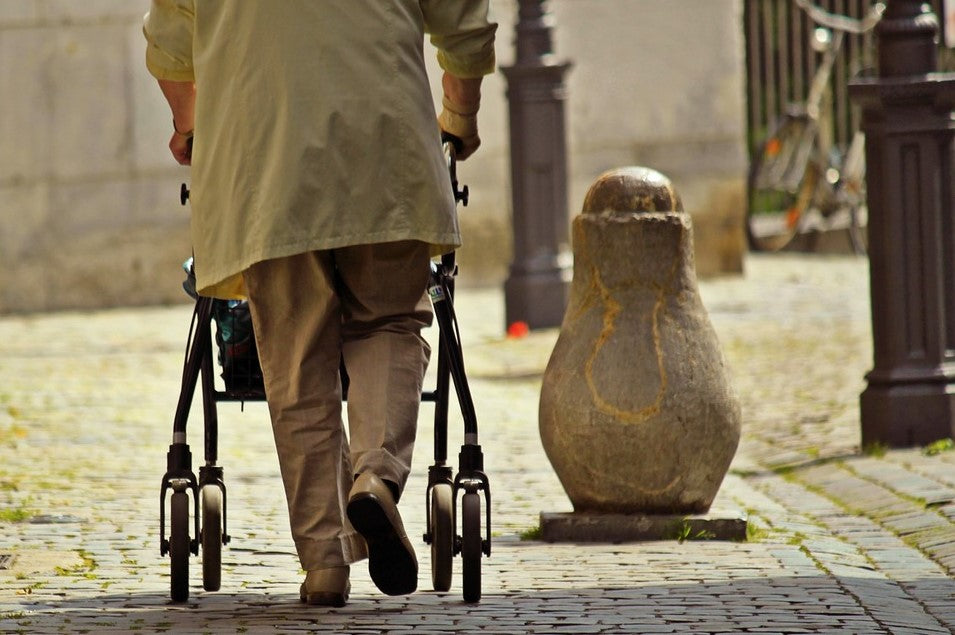
Different Types of Walkers
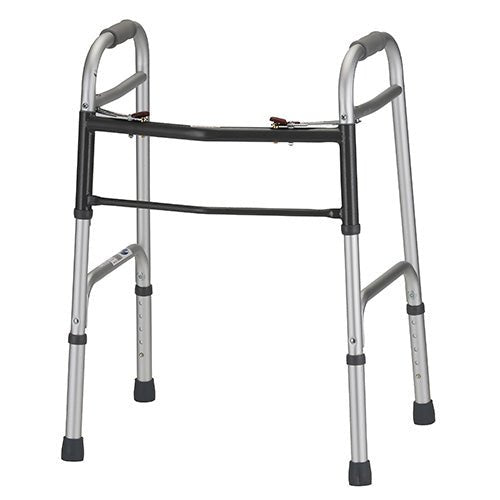
Standard Walker
A standard walker is the most basic type of walker in the market. The assistive device has four legs, and you can adjust its height and width to accommodate your unique physical needs. The legs may feature metal-reinforced rubber tips to increase stability and prevent floor/carpet damage.
Primarily designed for individuals with mobility problems that can be handled independently, a standard walker helps you control your body and learn to maintain an upright posture. For movement, you must pick up and move the device before every step.
Fitted on the walker’s handles are hand grips made of either soft foam or hard rubber. Soft foams are easy to grip and use; however, they wear out quicker than the hard rubber alternatives.
Most standard walkers fold, meaning transporting and storing them is a breeze. But you expect these models to be costlier than their non-folding counterparts. Also available are attachable trays for carrying light items with your standard walker.

Two-Wheel Walker
A 2-wheel walker, also known as a hybrid rolling walker, looks like a standard walker on two wheels, but it operates quite differently. You apply your weight on the walker. And instead of you lifting it in every step, it slides forward as you walk. Facilitating this movement is a pair of front wheels that roll along and back glides that control the speed.
This assistive device is best suited for individuals with limited strength and mobility. But it can also benefit a slow walker as the casters can help enhance their pace.
Two-wheel walkers facilitate a more natural gait. Besides being better on carpets, they come assembled, requiring little to no modification. However, the small wheels make this walker unsuitable for outdoor use due to the heightened chances of getting stuck in rougher terrains.
Rollator Walker
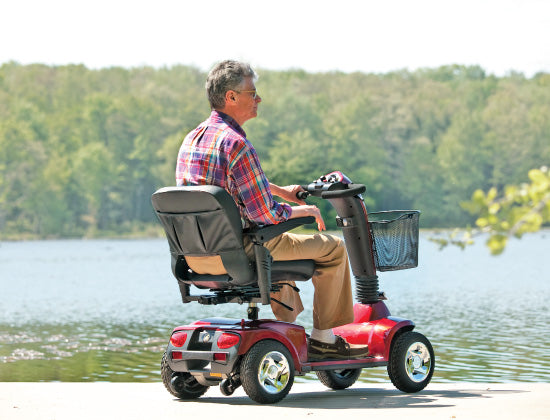
Rollator/ rolling walker may be an expensive choice, but it’s among the most flexible types of walkers. They are a wheel-based alternative to standard walkers and are available in three- and four-wheel versions. Still, they are a bit more stylish than the typical walkers.
Rollators are best suited for people whose arms are too weak to hold a traditional walker, individuals with limited upper body strength to push a standard walker, and those that need to make frequent stops while walking. Furthermore, four-wheeled models are equipped with a seat that offers you space to sit and rest on longer trips. Most come complete with a backrest for additional support.
Because of the seat and the wheel & brake system, rollators tend to be heavier than traditional walkers. Typically, rollators weigh between 15 and 18 pounds. But there exist models advertised as lightweight whose weight lies somewhere between 11 and 14 pounds.
Three-wheel rollators have increased maneuverability, can negotiate sharp corners, and are very handy in smaller spaces. They are lighter than the four-wheeled counterparts, but their design limits them from incorporating a seat. In comparison, a four-wheel rollator offers more mobility. But it requires seamless handbrake operations- a feature that may not sit well with all users.
Note that these devices come with varying weight-capacities. Whereas a standard rollator can support up to 350 pounds, broader bariatric models are designed to accommodate as much as 700 pounds. Also, bear in mind that the higher the weight capacity, the more the mobility aid itself weighs.
A rollator can have a height-adjustable seat and handlebars, with some boasting enough range to be classified as both ‘youth’ and ‘adult’ models. Additionally, you can fold it into a compact size for seamless storage and transportation.
Walker Features
-
Grips/ Handholds
Walker grips are designed to minimize hand discomfort and absorb shock from your arms and upper body when using your walker. Plastic handholds are a standard feature on many lower-cost walkers; however, they are uncomfortable to use… and your hands can slide easily while using the mobility aid, increasing the risk of falls.
If your hands tend to be sweaty or you are looking for more comfort and ease of use, it is best to choose a walker with foam, padded, or gel hand grips. Some walker hand grips feature two materials. The part you hold could be made of foam or gel, while the underside features rubber construction to prevent slippage.
Also, pay attention to the grip design. Patterned or textured handgrips are best suited for people with low grip strength. Some handholds have bulged centers for extra cushioning, comfort, and more comfortable grip. -
Legs
Standard walker legs commonly feature aluminum construction. However, their thickness varies substantially from one walker model to another, depending on the weight capacity and expected use. Typically, indoor walkers have lightweight tubes, while outdoor walkers have denser and heavier tubes.
Also available are bariatric walkers featuring heavy-duty steel legs… and designed to support plus size users safely.
Height-adjustable legs have locking mechanisms that allow users to adjust the height to their convenience. The best way to determine the right walker height is by checking the elbow bend angle- it should be natural and comfortable. -
Wheels
Wheeled walkers incredibly ease mobility and outdoor movements. In two-wheel walkers, the casters do not swivel. With three to four swivel wheels, rollators offer the most mobility and maneuverability. Plenty of walkers have flexible wheel systems that can be locked for fixed casters and unlocked for swivel casters.
Note that walker wheels come in various diameter sizes, typically between six and ten inches. Smaller wheels are suitable for petite users and indoor use.
Great for offsetting shock of uneven grounds, larger wheels allow you to use the walker outdoors. They have fewer revolutions than smaller wheels, meaning the walker frame experiences less vibration.
You also need to pay attention to the wheel materials. Rubber is the highest quality material for walker wheels, offering incredible durability, softness, and grip. Polyurethane (PU) mimics rubber’s softness, appearance, and grip; however, it is a bit harder and has less grip. -
Seats
If you are looking for a rollator with a seat (particularly a four-wheeled model), you may need to choose between a flat and padded seat. You can flip up the seat, so you walk within, and not behind, the walker.
Talking of seat width, adult standard sizes range between 13 and 18 inches. Bariatric rollator walkers have wider seats, measuring at least 20 inches. Generally, there should be about 25mm space between your hip and the seat’s edge when you are seated.
Seat height varies from model to model. Generally, pick a seat height that allows your feet to rest on the ground and one you can comfortably get on and off from. A height-adjustable seat can cater to various height requirements. Some seats have backrests for extra comfort. -
Brakes
Most rollator walkers incorporate bicycle-style or loop-lock handbrakes installed just under each handlebar. You only need to squeeze the brake levers to slow down your rollator.
Also in existence is the reverse brake system. It offers better control by being locked by default and unlocked only when the handlebars are squeezed.
If pushing the handbrake is difficult, you may choose the less common push-down, weight-activated brakes engaged by exerting enough pressure on the rollator’s frame. But seniors may struggle to find the balance between applying the brakes and leaning on the walker for support. -
Folding Walkers/Rollators
A majority of walkers and rollators fold, which is handy if you travel a lot and bring the mobility assistive device with you. A folding walker occupies less storage space too. Before walking out of the medical equipment store or hitting the ‘confirm order’ button, ensure the walker can fit in your car’s trunk when folded.
While a rollator is heavier than a standard walker, this should not spell trouble for you unless you intend to load and unload the rollator from your car frequently.
Choosing the Correct Walker or Rollator
What Are Your Needs?
The choice between a walker and rollator will depend on your needs.
A standard walker offers more stability since all four legs stay on the ground. This makes them ideal for individuals with balance issues, weakness while standing, or need strong immobile support to help them walk. However, the walker is most suitable for indoor use and shorter distances due to the slow walking pace and substantial energy spent lifting the walker.
Although a two-wheel walker offers less support and stability than a standard walker, it allows you to maintain a more natural gait.
A rollator could be your best bet if you can balance yourself but need frequent rests, easier navigation, more outdoor adventures, or help with medical necessities or shopping. It is also a great option if you struggle to lift a regular walker.
Walkers FAQs
-
Where Will You Frequently Use it?
If you intend to use a walker primarily indoors, a lightweight aluminum model can serve the purpose. However, ensure it can comfortably support your weight. High-strength should be a top consideration for walkers for outdoor use. A standard walker is best suited for use at home, and the two-wheel alternative is a better choice for outdoor use.
Talking of rollators, choose one with smaller wheels for indoor use. You’ll also want to ensure the wheeled walker fits through your doorways and can be effortlessly maneuvered into rooms and in the hallways. For outdoor use, opt for a rollator with wheels measuring at least 8 inches in diameter. -
Speed Control
A rollator with uncontrollable speed can be dangerous in sloped terrains due to its tendency to roll away from the user…and retrieving it would be difficult if the user is alone.
For your safety and peace of mind, choose a rollator with a speed resistance system designed to reduce speed and prevent acceleration when going downhill. Still, the speed control tech stops the sensation of feeling pushed back when walking up a slope with your rollator -
What is the Proper Height of a Walker?
The wrong walker/rollator height puts you at risk of aches and pains. Using a walker that is too low means you stoop over excessively, hampering proper body mechanics. And a walker that is too high causes discomfort to your arms.
A good rule of thumb for determining if your walker/rollator fits you is standing in front of it at a relaxed and upright position. With your arms hanging loosely at your sides, the walker’s top should align with the level of your wrist. Additionally, there should be a slight bend (about 15-20 degrees) in your elbows when you grasp the handles. -
Which is Better, a Cane or a Walker?
If your feet feel unsteady or you struggle with low body balance, a walker can offer you more support. A cane, on the other hand, can be helpful if weakness or pain on one side of your body compromises your balance or walking ability. Ultimately, the choice between a walker and a cane depends on several factors, including your balance, fitness level, and strength. It is best to consult with a physical therapist to choose the specific device type unique to your needs.
-
What is the Lightest Weight Rollator Walker?
At a mere 12.7 pounds in weight, Carbon Ultralight Rollator manufactured by Acre is currently the lightest four-wheel rollator walker in the market. It features a carbon fiber frame, adjustable height, 20 cm wheels, and a polyester seat that supports up to 130 kg. The lightest three-wheel rollator is the Carex Three Wheel Walker that weighs 10 pounds and has a weight capacity of 113kg.
-
How Do I Stop My Walker from Scratching the Floor?
Individuals often attach tennis balls to walker’s legs to keep the walkers from damaging the floor/carpet. However, walker balls tend to collect germs and dirt from the ground, wear out faster, and may make the walker unstable. The best alternative is walker ski glides. They are easy to install and clean, last much longer than tennis balls, and glide smoothly over different surfaces.
-
Does Medicaid/Medicare Cover Walkers?
Yes. Both Medicaid and Medicare cover walkers and rollators as durable medical equipment (DME). The mobility assistive device must be medically necessary and prescribed by a doctor. But with associated cost buying a walker in cash can be more cost effective.
-
How Much Do Walkers Cost?
There is no fixed answer to this question because walker prices vary significantly depending on many considerations, including style, foldability, frame construction, and others. Typically, standard walkers are priced from about $30 to $100, while two-wheel walkers cost between $50 and $250. Rollators are costlier, with budget models priced from around $55 and premium rolling walkers costing as high as $650.
-
What is a 2 position recliner?
These are not capable of leaning back like a traditional recliner and have one motor. The back is pretty much straight, and this type of chair is best for reading. The movement allows for gradually bringing the chair up and forward, with the footrest moving down and back, to help ease the user's transition from sitting to standing.
